
Think about the moment before the browser opens.
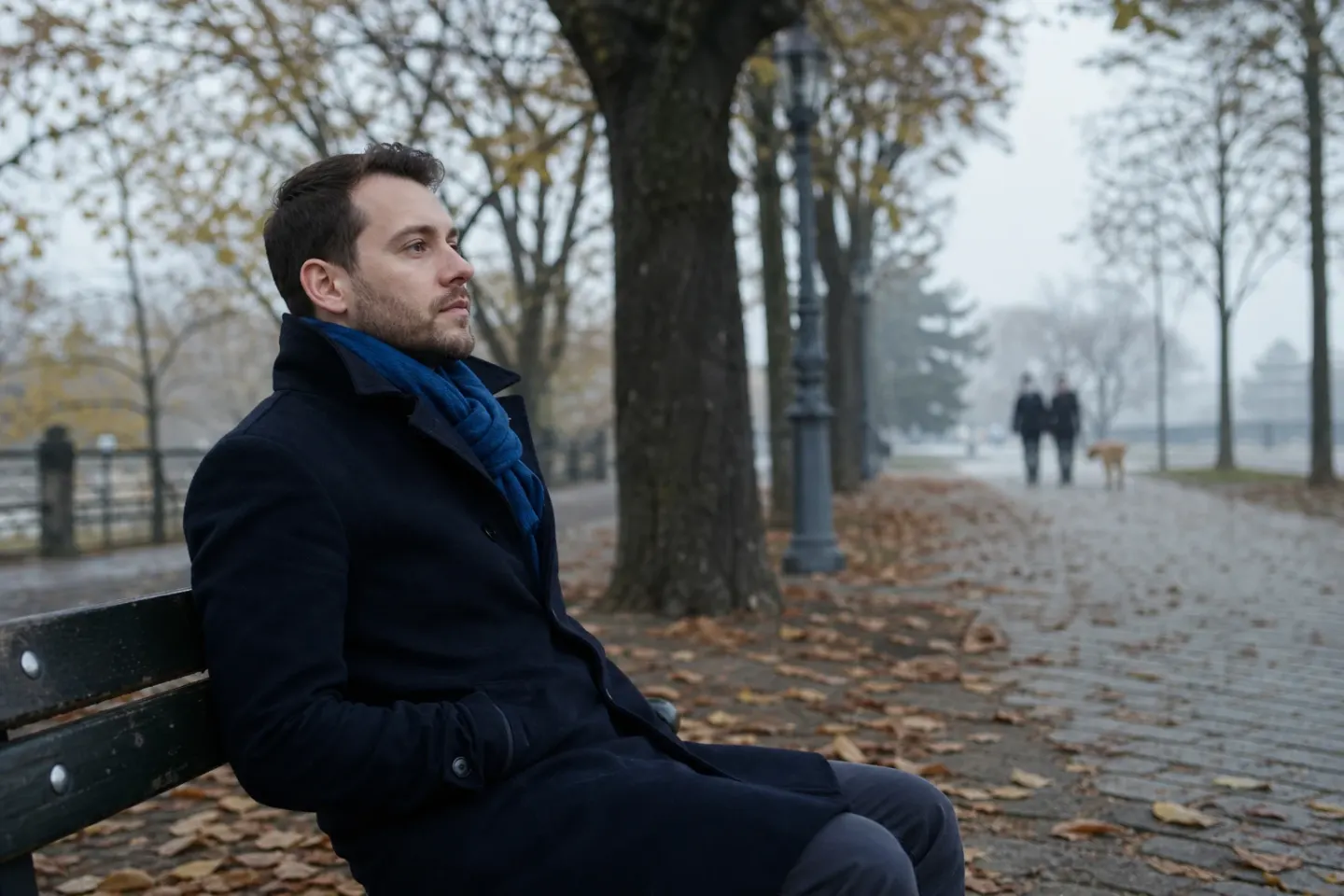
Not the video. Not the regret afterwards. The moment before: an awkward conversation, a task you do not want to face, a quiet room at the end of a disappointing day.
If porn repeatedly appears at those moments, the question may be more than “Why am I so interested in sex?” It may also be “What feeling am I trying to leave?”
Relief can become part of the pattern
In interviews by Hanseder and Dantas, men with self-perceived porn addiction described using it to cope with negative emotions and boredom. The study records the experiences of 13 selected participants; it does not tell us that every session has this purpose. Read the study.
A separate survey of 339 people found an association between difficulty regulating emotions and problematic use, with loneliness contributing to the statistical model. Because the data were collected at one point in time, the researchers could not establish a sequence of cause and effect. Cardoso and colleagues.
These findings make a useful question possible: when porn seems difficult to give up, what job is it doing in your day?
For Lukas, 24, it did several jobs at once: he describes turning to porn “when I couldn’t cope with life, as a reward for success, when I was depressed, and so on.” Read his story (content warning: explicit descriptions of sexual material).
Pleasure, distraction, and escape can overlap
You do not need to decide that your interest is either sexual or emotional. A session can offer both arousal and distraction.
The more practical distinction is whether the response fits the situation. If you are lonely, has it helped you connect with anyone? If a task is frightening, is the task now easier to approach? If you need rest, do you feel rested?
Do not assume the answers. Look at a recent occasion and describe what actually changed. Perhaps the session provided temporary relief but left you with less time and the same problem. Perhaps something else was going on entirely.
Match the next step to the need
An original exercise is to complete two sentences:
“I was feeling ___.”
“What I needed was ___.”
Then choose one small action related to that need. For example, if you were overwhelmed by a task, the action might be opening the document and writing one rough sentence. If you wanted company, it might be sending a low-pressure message. If you were exhausted, the first step might be preparing for bed rather than finding a more productive distraction.
These suggestions are not a tested treatment package. They are ways to make your plan more specific than “use more willpower.”
You may still feel an urge after taking the action. The exercise has not failed simply because a feeling remains. A short pause for that moment can help you respond without waiting for the urge to pass.
Do not remove the escape and ignore the problem
A blocker can interrupt access. It cannot have the difficult conversation, solve financial stress, or provide friendship.
That does not make practical barriers pointless, and blocking porn on your phone takes a few minutes with built-in settings. It means the rest of the plan matters too. If you block one route while leaving every evening equally isolated or overloaded, ask what support is missing—not only whether the barrier is strict enough.
A change plan can therefore have two parts: what you will do when the urge arrives, and what you will do about the recurring situation around it. Our practical starting guide helps separate them.
When the feelings need help of their own
If anxiety, low mood, distress, or avoidance are persistent or significantly affecting your life, seek qualified professional support. You do not have to prove that porn caused them, and changing porn use should not become a reason to postpone care. Lucas describes a long depression in which he meant to see a psychiatrist but decided to handle it alone, and believes the depression kept him stuck (content warning: depression, severe anxiety and alcohol use).
You can tell a therapist: “This is one of the ways I cope, but it is creating problems of its own.”
That sentence leaves room for both truths: the behaviour may have served a purpose, and you may now need a different way to meet that need.



No published comments yet.