

If you have ADHD and find porn harder to stop than other people seem to, there is a real pattern behind that, and it is not a character flaw. Impulsivity, a low tolerance for boredom, a pull towards stimulation and the ability to lock onto something for hours can all make an always-available, endlessly new stream hard to put down. The good news: the approaches that help ADHD in general, such as treatment, sleep and a setup that removes temptation instead of relying on willpower, tend to help here too.
This page is for people with a diagnosis and for people who suspect they have ADHD. It is not a way to diagnose yourself.
Is there a link between ADHD and porn addiction?
Research points to an association, mostly from self-report surveys.
In a study of more than 14,000 adults, Bőthe and colleagues found that ADHD symptoms had a moderate association with hypersexuality in men and women, and a moderate association with problematic porn use in men (weaker in women). The authors suggest that when men have high levels of problematic porn use, ADHD should be assessed as a possible co-occurring condition. Read the study.
A smaller online survey of 206 adults found that people with ADHD reported more hypersexual behaviour than people without it, but no more sexual dysfunction. In women, these behaviours were closely linked with emotional dysregulation and impulsivity; in men the pattern was less clear. Hertz and colleagues.
None of this means ADHD makes everyone watch more porn, or that porn causes ADHD. It means the two meet often enough that it is worth looking at both. If you want the clinical terms, this guide explains PPU and CSBD.
Why is it harder to quit porn with ADHD?
The NHS describes adult ADHD in terms of attention, energy and impulse control, including “making quick decisions without thinking about what might happen as a result”. NHS: ADHD in adults. Each of these meets porn at a weak point:
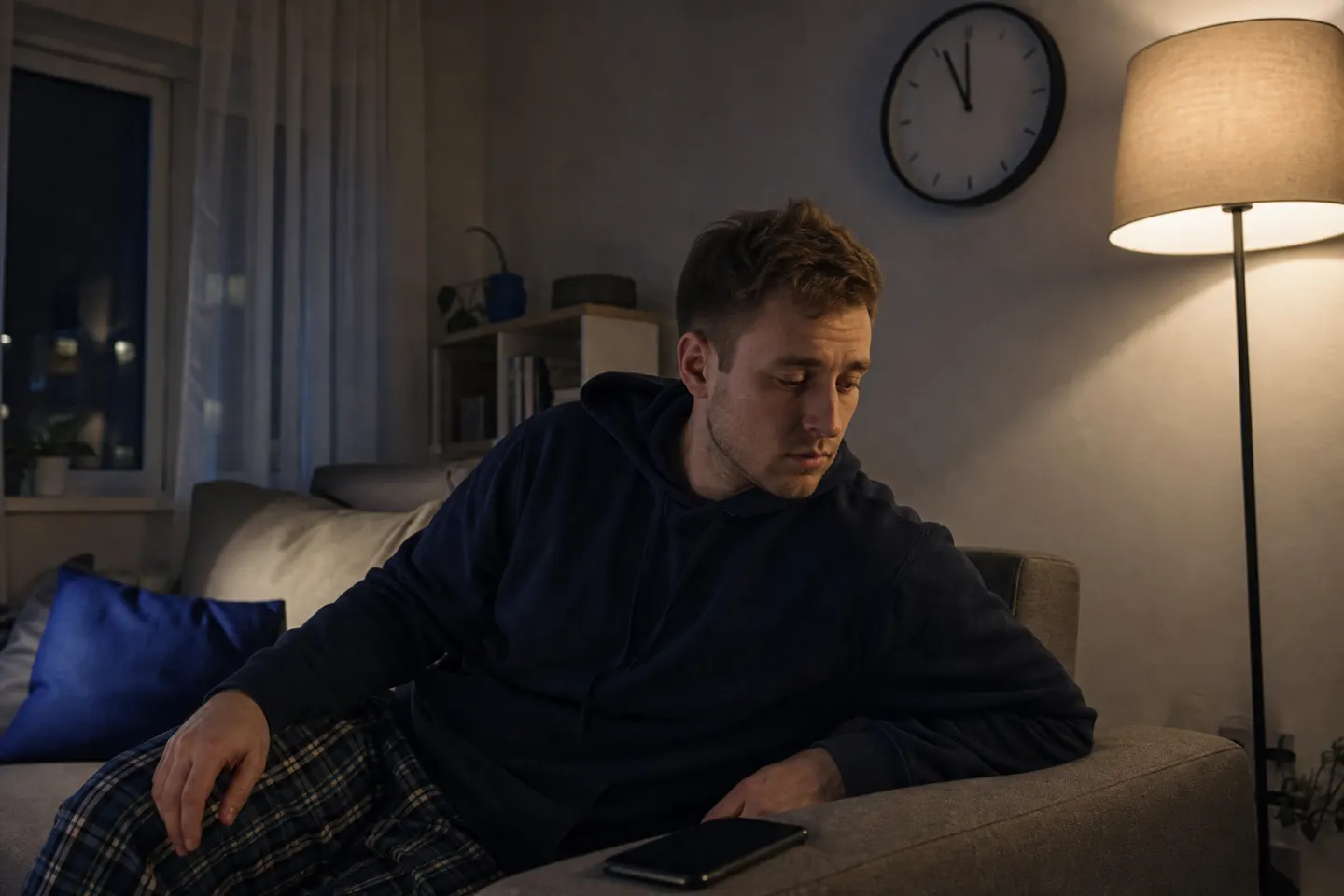
- Impulsivity. The gap between “I want to” and “I’m doing it” is short. A plan made in the morning has little chance at 1am if the phone is in your hand.
- Boredom. Unstructured time can feel almost physically uncomfortable. Porn fills it instantly.
- Stimulation-seeking. A new tab is always one tap away, and novelty grabs attention. Our piece on why “one more video” turns into an hour looks at how sessions stretch.
- Hyperfocus. The same ability that lets you work for five hours straight can lock you into a session long past the point you meant to stop.
- Mood and stress. A 2023 review describes porn in people with ADHD as a possible “self-medication” for stress, anxiety and low mood, which may raise the risk of problematic use. It is a narrative review, not a trial. Privara and Bob.
- Sleep. Late nights make impulse control worse the next day, which makes the next late night more likely. See revenge bedtime procrastination.
Does ADHD cause hypersexuality?
Many people with ADHD report a higher sex drive or more intense sexual thoughts, and the studies above back that up on average. Many others do not. Hypersexuality is not one of the core diagnostic symptoms.
Two things are worth taking to a doctor:
- A sudden rise in sex drive together with little need for sleep, racing thoughts, feeling unusually confident or spending impulsively. The NHS lists these among the symptoms of a high mood in bipolar disorder. NHS: bipolar symptoms. See a GP promptly.
- A change in sex drive after starting or adjusting ADHD medication, in either direction. Tell your prescriber rather than changing the dose yourself.
Do I have ADHD, or is it the porn?
This is a fair question, because hours of fast, scattered screen time can leave anyone distracted and restless. A few pointers from the NHS: ADHD symptoms usually start before age 12, and a GP will consider other explanations such as autism or anxiety before referring you to a specialist. NHS: ADHD in adults.
So if your concentration problems go back to childhood, show up at school, work and home, and were there before porn was part of your life, an assessment makes sense. If they started or worsened along with late-night sessions, changing the habit may tell you something too. Both can be true at once. Online quizzes and social media videos cannot settle it; a specialist assessment can.
Getting assessed and treated
If ADHD symptoms affect your studies, work or relationships, the NHS advises seeing a GP, who may refer you to an ADHD specialist such as a psychiatrist. Waiting times can be long. Treatment can include medicines such as methylphenidate or lisdexamfetamine, started and monitored by a specialist, talking therapies such as CBT, and changes at work or university. NHS: ADHD in adults.
You can raise porn in the same appointment: “I think my ADHD makes it hard to control my porn use, and it’s causing problems.” For therapy options specific to porn use, see finding the right kind of help and who to see and what to ask.
The NHS also notes that people with ADHD are at higher risk of suicide. If you are having thoughts of ending your life, get help now: in the UK call 999 or Samaritans on 116 123; in the US, call or text 988.
Environment beats willpower
With ADHD, a plan that depends on remembering and resisting at the worst moment tends to fail. A plan that removes the moment works better.
- Add friction. Turn on a content blocker or your phone’s screen-time limits, ideally with a passcode someone else holds. Step-by-step for iPhone and Android.
- Take the phone out of the bedroom. The NHS suggests a regular bedtime and avoiding screens close to bed for people with ADHD. NHS.
- Plan for boredom, not only for urges. Know what you will do in the empty hour after work: a walk, a call, a game with a clear end, a podcast while cooking.
- Use external stops. Timers, alarms, a friend you check in with, working in a café or library instead of alone in your room.
- Have a two-minute plan for the urge itself. What to do when an urge hits gives one.
A short self-check
- Do sessions regularly run far longer than you meant, in a way that feels like hyperfocus?
- Do you reach for porn mostly when you are bored, restless or avoiding a task?
- Are late-night sessions cutting into your sleep most weeks?
- Have you made plans to stop that lasted hours rather than days?
- Is it affecting work, study, money, sleep or a relationship?
If several answers are yes, it is worth addressing your porn use and your ADHD together. If none fit, porn may not be a problem for you, and this page can stop here.
What people describe
Ethan, 25, does not mention ADHD, but his description of how an impulse can win will sound familiar to many readers. He writes that at night “it feels like a reflex; I don’t even have time to consider what I am doing”, and that “there is no will when the mind is asleep”. Read Ethan’s story.
A 30-day experiment
Choose 30 days to see what changes. It is not a cure or a deadline.
- Set up the barriers on day one: blocker or screen-time limits, and a charger outside the bedroom.
- Pick a fixed bedtime and set an alarm an hour before it as a “screens down” signal.
- Write your boredom list: five things you can start in under a minute.
- Track two numbers each day: hours of sleep and whether you watched. A tick in a calendar is enough.
- Book the GP appointment if you have not been assessed and the pattern goes back to childhood.
At the end, look for patterns rather than a perfect record. Which days went well, and what was different about them?


No published comments yet.