
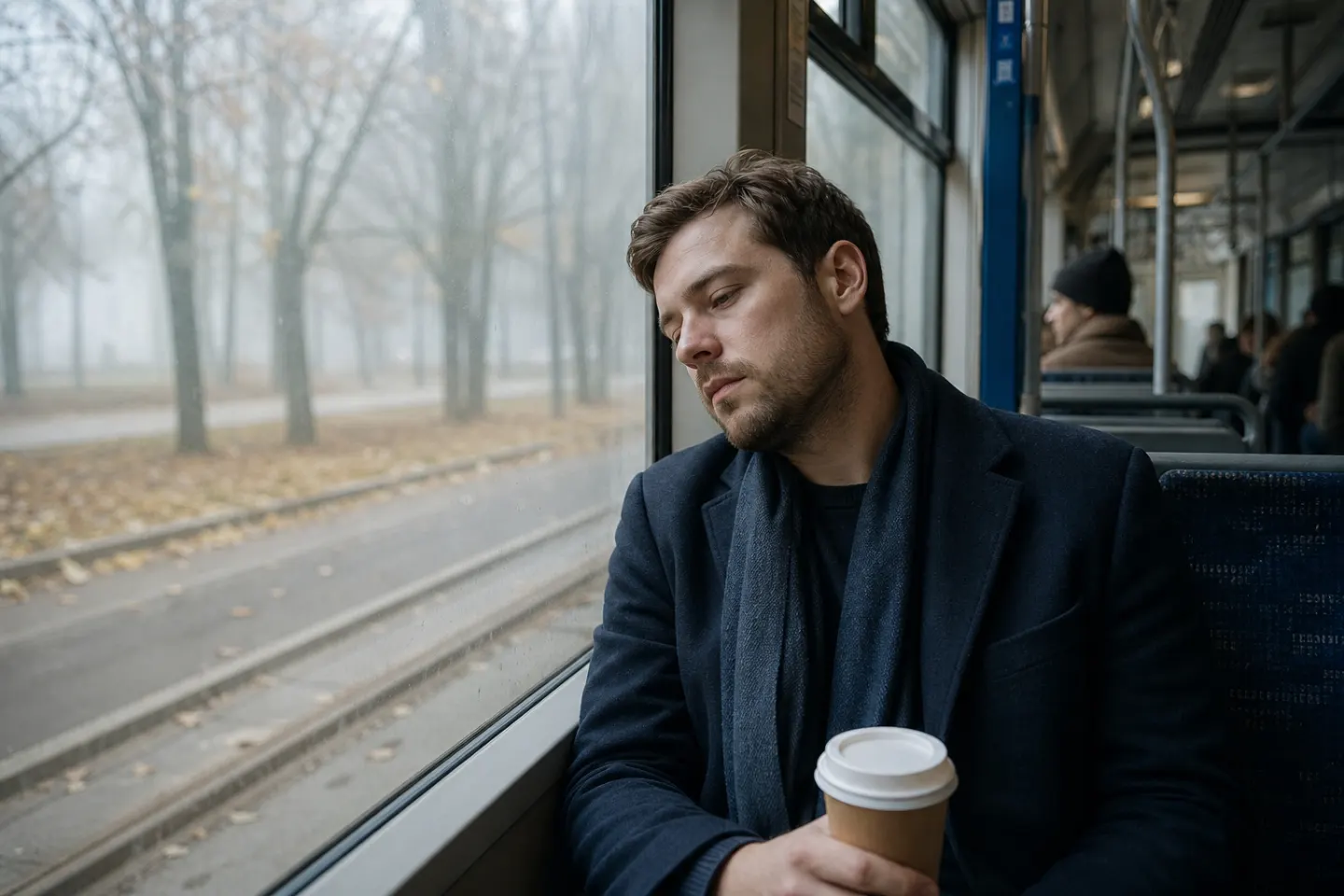
If you are a young man who is always tired and foggy, even after a full night in bed, you are not imagining it and you are not simply lazy. Constant tiredness and brain fog are common, and they usually have more than one cause: sleep, mood, stress, health, alcohol or weed, and what your nights actually look like. The NHS puts it plainly: it is normal to feel tired sometimes, but if you are tired all the time and do not know why, it could be a sign of a problem.
Start with what a doctor can find, then look honestly at your evenings.
Why am I always tired as a young man?
Age does not protect you from the usual causes. The ones worth checking first:
- Not enough sleep, or poor sleep. The NHS lists short sleep and insomnia first among common causes, and suggests aiming for 6 to 9 hours at regular times. NHS: tiredness and fatigue.
- Sleep apnoea. Breathing that stops and starts at night, loud snoring, and gasping or choking noises. During the day you may feel very tired, struggle to concentrate, have mood swings or wake with a headache. Someone else often notices it before you do. NHS: sleep apnoea.
- Low mood or depression. The NHS lists lack of energy among the symptoms of depression, alongside losing interest in things you used to enjoy. NHS: symptoms of depression. If low mood and porn use seem tangled together, see porn and depression.
- Anaemia and diabetes. Iron deficiency anaemia can bring palpitations, breathlessness and pale skin; diabetes can bring thirst, peeing more often and weight loss. NHS: tiredness and fatigue.
- Thyroid. An underactive thyroid can cause extreme tiredness, feeling cold, weight gain and difficulty thinking clearly. NHS: underactive thyroid.
- Low vitamin B12 or folate. Extreme tiredness, pins and needles, and problems with memory and judgement are among the symptoms. NHS: B12 or folate deficiency. Vitamin D gets blamed online too; the NHS describes it mainly in terms of bones and muscles, and advises everyone in the UK to consider a supplement in autumn and winter. NHS: vitamin D.
- Testosterone. Low testosterone can cause tiredness, but the NHS notes that in many men with these symptoms the cause has nothing to do with hormones, and that stress, poor sleep, alcohol and lack of exercise are common explanations. NHS: the “male menopause”. A blood test from a doctor answers this better than a supplement.
- Alcohol and weed. Cutting down on alcohol is on the NHS list of things that help. Weed is often used to fall asleep, yet in a 2025 review of observational studies, recreational use was linked with poorer sleep quality and more insomnia symptoms, especially in men and younger users. Experimental studies did not show the same link, so the direction is uncertain. Mao and colleagues.
- Screens late at night. The NHS advises no smartphones or screens in the hour before sleep. NHS: tiredness and fatigue. If you stay up on your phone even though you are exhausted, that pattern has a name: revenge bedtime procrastination.
Brain fog, or can’t concentrate on anything?
Brain fog is not a diagnosis. It is a name for trouble thinking clearly, focusing, remembering and finding words. Cleveland Clinic lists lack of sleep, stress, anxiety, depression, ADHD, diabetes and poor nutrition among common causes. Cleveland Clinic: brain fog. If you are always tired and zoning out, tiredness is usually the first thread to pull.
If the main problem is that you can’t focus, ask one question first: is this new, or has it always been like this? A change over the last months or years points back to sleep, mood, stress and how your evenings go. Difficulty that goes back to school is different. The NHS says ADHD symptoms usually start before the age of 12, and in adults can look like being easily distracted or forgetful, finding it hard to organise time and struggling to finish tasks. NHS: ADHD in adults. That pattern is worth an assessment rather than more willpower.
Always tired but blood tests are normal?
That is a common result, not a dead end. In a Dutch trial of 325 people who saw their GP with new unexplained fatigue, only 8% turned out to have a physical illness that blood tests could detect, and ordering more tests mainly added false alarms. Koch and colleagues. Most participants were women, with an average age of 41, so it is not a perfect match for young men, but the lesson carries over.
Normal results rule out some things. They do not measure how late you fall asleep, how often your breathing stops at night, how you feel most days, or what fills the hours before bed. Those come next, ideally with the same doctor.
When to see a doctor
The NHS suggests seeing a GP if:
- you have felt tired for a few weeks and you are not sure why;
- the tiredness affects your daily life;
- it comes with weight loss or mood changes, or someone has noticed you gasping, snorting or choking in your sleep. NHS: tiredness and fatigue
Also go if you notice palpitations or breathlessness, thirst and peeing much more often, or pins and needles. If you have felt low, hopeless or uninterested in almost everything for most of the day, nearly every day, for more than two weeks, mention it; it counts as much as any blood result. NHS: symptoms of depression.
If you are having thoughts of harming yourself or ending your life, get help now. In the UK, call 999 or Samaritans on 116 123; in the US, call or text 988.
The factor people rarely check: late-night porn sessions
This is not the cause for everyone, and the research is limited. But no blood test asks about it, and it is easy to measure.
In a qualitative study of 67 people who saw their own porn use as a problem, several described “brain fog”, lethargy and low motivation after heavy use, and a hangover-like exhaustion after long sessions. The researchers note that sleep loss and distress about the habit may explain part of it. These are people’s own accounts, not proof of cause. Ince and colleagues.
In a 2024 survey of 1,008 young adults in Rhode Island, those who screened positive for insomnia had higher odds of screening positive for problematic porn use, and the link held only for heterosexual men. It is one survey at one point in time, so it cannot say which came first. Noel and colleagues.
The simplest mechanism needs no neuroscience: an hour that was meant for sleep went somewhere else. A short self-check:
- Do you often fall asleep later than you meant to because you were on your phone?
- Do porn sessions run longer than planned, sometimes an hour or more?
- Are you more foggy or drained the morning after a long late session than after other late nights?
- Do you use porn to switch off when you are wired, stressed or cannot sleep?
- Have you tried to cut back at night and found it harder than you expected?
A couple of yes answers make this worth testing alongside the other causes, not instead of them. If none fit, look elsewhere on the list above.
What people describe
Arjun writes that during years of heavy porn use he was “permanently tired and sleep-deprived even when I slept for twelve hours”, and that he first blamed cigarettes and weekend drinking, quit both, and still felt no better. Read his story. Content warning: it includes explicit descriptions and suicidal thoughts.
Lukas, 24, describes walking around “feeling dazed”, with headaches, feeling “terribly sleepy”. Going to the gym helped reduce the urge. Read his story (content warning: explicit descriptions of sexual material).
A 30-day experiment
If the self-check sounded familiar, choose a 30-day window to observe what changes. It is not a treatment and not a recovery timeline.
- Book the doctor first if any red flag applies, and keep that appointment regardless of the experiment.
- Log your nights. Each morning, write when you actually fell asleep, when you woke, and your energy and focus from 1 to 10. Note alcohol, weed and late caffeine.
- Set a screens-off time and a fixed wake-up time, including weekends.
- Make porn harder to reach on your phone. Turn on a content blocker or your phone’s screen-time limits (step-by-step for iPhone and Android), and charge the phone outside the bedroom.
- Replace the last hour with something low-effort that ends: a shower, a book, a podcast with a sleep timer.
At the end, compare the first and last weeks. If your energy improved, you have learned something useful, even though several changes at once cannot show exactly which one helped. If nothing changed, take your notes to a GP; they are exactly what a doctor needs.
No published comments yet.