

The problem may enter the room before anyone says the word porn.
A closed screen. An explanation that does not quite fit. A question answered defensively. Or the effort of arranging your time so that nobody has to know what is happening.
If you are hiding porn from your partner, or have found out that your partner hid it from you, there may be two issues to address: the behaviour itself and what secrecy is doing between you. Resolving one does not automatically resolve the other.
Privacy and deception are different questions
Being in a relationship does not erase a person’s privacy. At the same time, privacy is not a useful explanation for deliberately misleading a partner about an agreement you made.
Ask what the situation actually is. Did you discuss porn and agree on a boundary? Did one person assume an agreement that was never spoken? Has there been a direct lie? Are both people free to express a preference without threats?
These distinctions matter. A disagreement about values is not identical to a broken promise. Neither should be settled by covertly accessing someone else’s phone.
The relational cost has been described
In qualitative research by Shuler and colleagues, negative accounts included feelings of inadequacy, unmet expectations, and betrayal. The wider set of responses also included positive and neutral experiences; the study does not describe all couples as harmed. Read the research.
Willoughby and colleagues found that larger differences in partners’ porn use were associated with poorer relationship outcomes in a sample of 1,755 heterosexual couples. The survey did not establish whether those differences caused the problems. Read the study.
Secrecy itself has been studied more recently. In a 2026 survey of 1,223 partnered young adults in China and the UK, secret solo use was linked with lower sexual satisfaction and more sexual shame, while use the partner knew about, or shared use, was generally linked with better outcomes, especially for women. The authors point out that the link may run both ways: hiding can cost a relationship, and shame or dissatisfaction can also lead people to hide. Read the study.
Not every study points the same way. In a study of 240 US couples, whether a partner knew about the other’s use had little direct link with well-being; there was some evidence that hidden use went with lower sexual satisfaction but higher relationship satisfaction. Read the study. Survey averages can’t tell you what secrecy is doing in your relationship.
For your relationship, the practical question is specific: what has each person experienced, and what does each person believe they agreed to?
If you are the person hiding
Begin with what you can honestly take responsibility for. “I told you I had stopped, and that was not true” is clearer than a long argument about whether porn is common.
Explain the pattern without presenting it as an excuse. If stopping has been difficult, say so. If you need professional help, make that part of an actual plan rather than a promise offered to end an uncomfortable conversation.
Do not expect your partner to immediately reassure you, decide the relationship’s future, or become responsible for preventing another session. They may need time, distance, or support of their own.
Accountability can be concrete without requiring unlimited surveillance or graphic disclosure. If you are considering a blocker, why a partner is a poor password keeper is worth reading first.
If you are the person who discovered it
You are allowed to be concerned about the behaviour, the concealment, or both. You do not have to decide immediately whether you will stay, leave, forgive, or agree to a particular plan. If he has told you he is addicted, this page is written for you.
Try separating what you know from what you fear. Which agreement was broken? What information matters to your decisions? Which questions are about trust, and which are painful comparisons that more explicit detail may not resolve?
You can state a boundary without promising to monitor another adult’s every action. You are also not obliged to accept sexual activity, imitate porn, or change your appearance to keep someone from watching. If your partner still watches porn but avoids sex with you, this page for partners looks at what may be behind it and how to raise it. If you are not sure porn is part of it, start with when a husband doesn’t want sex or when a boyfriend doesn’t.
Replace a vague promise with a clear conversation
If both people want to work on the relationship, discuss:
- What behaviour the agreement covers.
- What honesty will look like if the plan is not followed.
- What support each person wants outside the relationship.
- When to revisit the agreement.
- What each person will do if the arrangement is not acceptable.
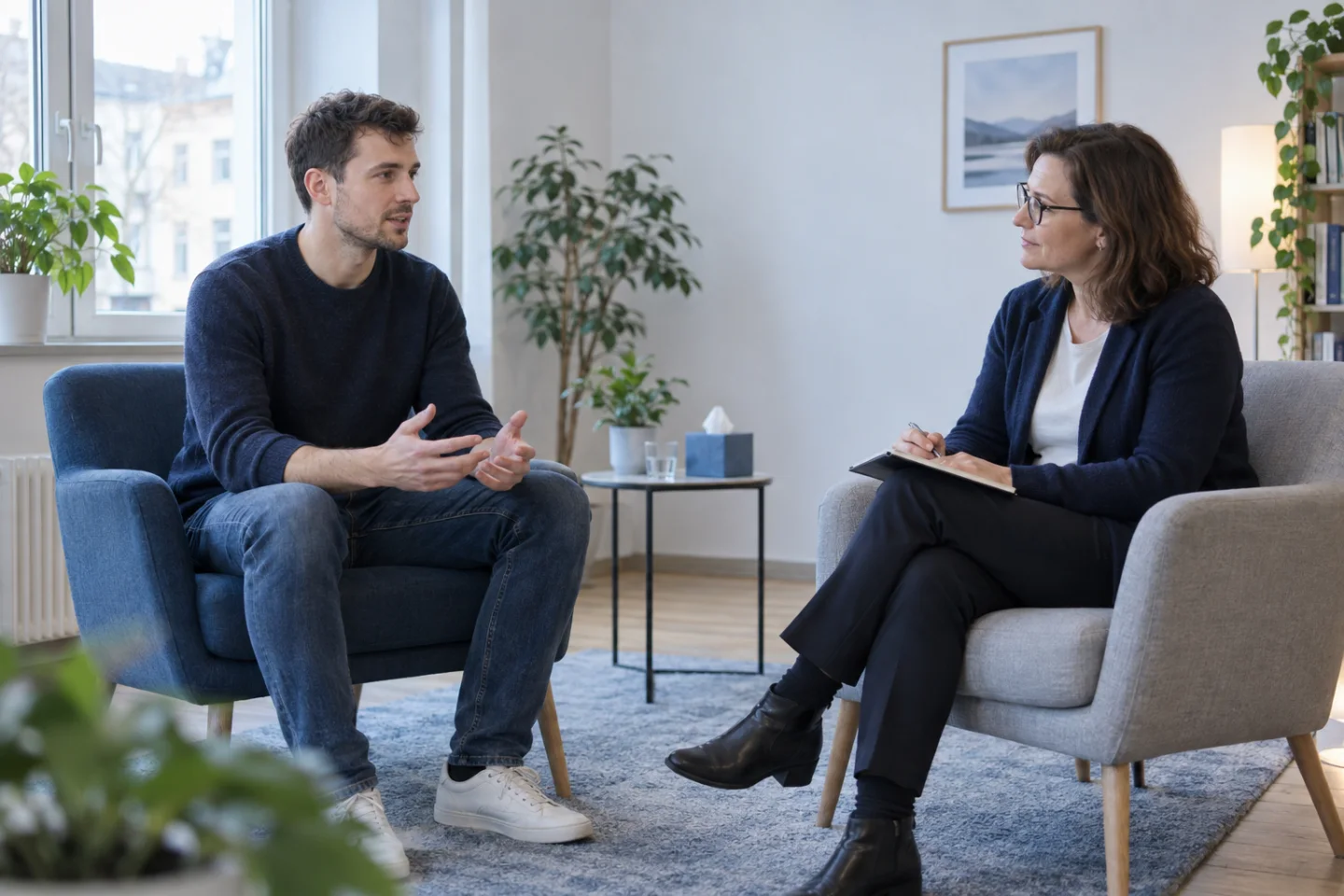
This is an editorial conversation framework, not a clinically validated repair protocol. A qualified couples therapist can help when discussions repeatedly become hostile or go nowhere.
If there are threats, intimidation, or violence, prioritize your safety and seek individual specialist support rather than treating a disclosure conversation as the next required step.
Start with our conversation guide. Trust does not have to be restored on demand. The next step can be as modest—and as difficult—as making the next statement an honest one.




No published comments yet.