
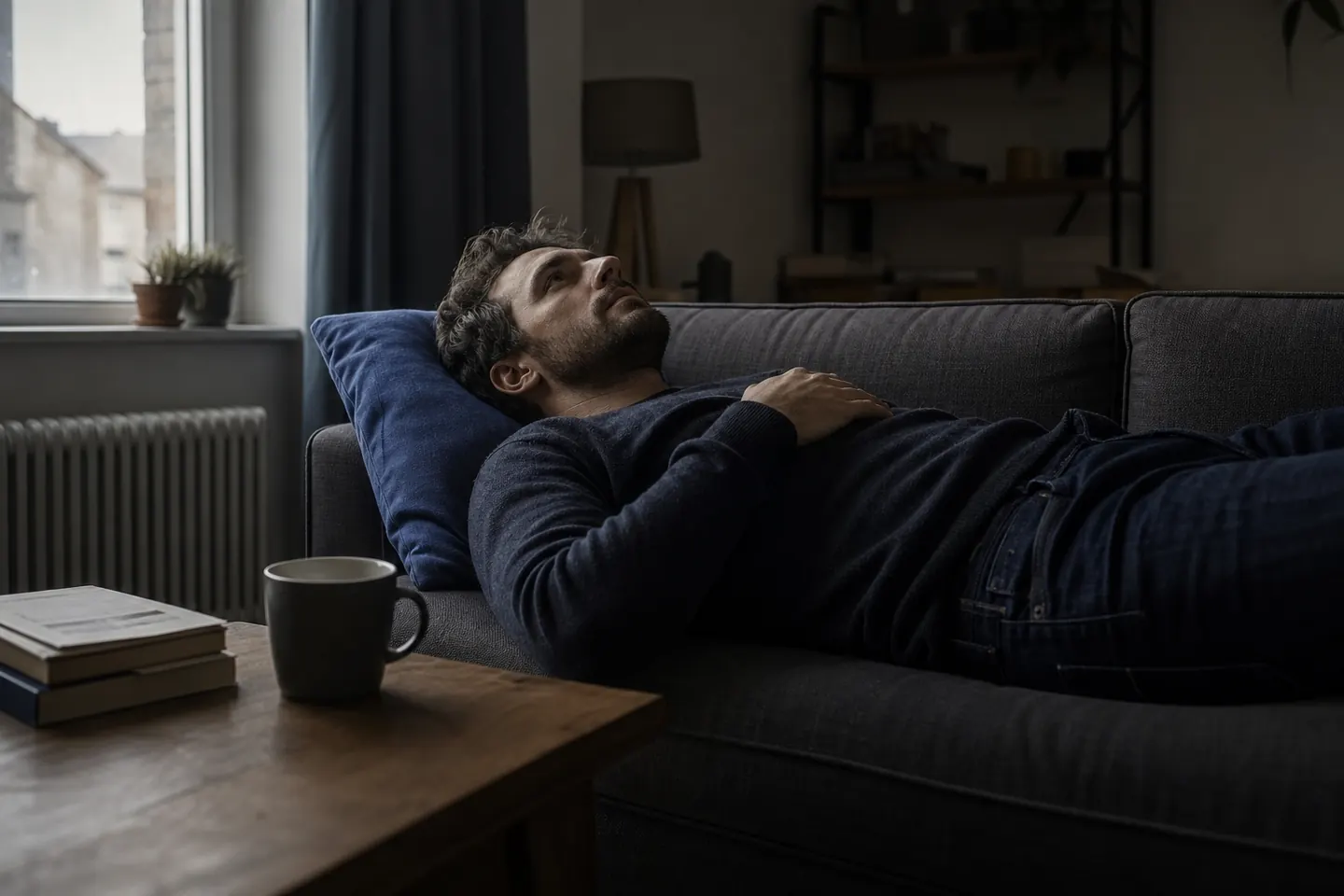
A flatline after quitting porn is the name forum members give to a stretch of very low sex drive, sometimes with weak or absent erections and a general flatness, that can arrive after they stop watching. It is a real experience for the people who describe it. It is not a measured stage of recovery: no study has tracked how often it happens, how long it lasts or what causes it, and low desire has many ordinary causes that are worth checking before you decide to wait it out.
What NoFap is covers the community and its vocabulary. This page is about the flatline itself. For mood, sleep and other changes in the first weeks, see porn withdrawal symptoms.
Evidence strength: stronger for the everyday causes of low sex drive, such as stress, depression, medicines and alcohol; early for the flatline itself, which has been described in forum journals but never measured. The stories below are lived experience.
What do people mean by the flatline?
The best description comes from researchers who analyzed 104 abstinence journals written by men on a “rebooting” forum. Close to a third reported that instead of feeling more desire during abstinence, they felt less, and called it the flatline. Members used the word for a significant drop or loss of libido; some used it more broadly, to include low mood and a sense of disengagement from everything. Fernandez, Kuss and Griffiths.
The same journals show why it frightens people. Not knowing when desire would return was disconcerting, and some were tempted to go back to porn just to check whether everything still worked. One man, 35, wrote: “I start to wonder whether everything is still working in the way it should in my pants.”
On forums, people describe it in similar terms: no interest in sex, porn that no longer does anything, fewer morning erections, and sometimes a feeling of being emotionally numb.
Is the flatline real? What research can and can’t say
The experience is real. The explanation forums attach to it, that the brain is “rebooting” and desire will return once the process finishes, has not been tested.
Here is what studies can say:
- Abstinence has been studied only briefly. The one randomized trial asked 176 students who watched porn at least three times a week to stop for seven days or carry on as usual. It measured craving, mood and withdrawal symptoms, not desire, and found no difference between the groups. Fernandez and colleagues. Most participants were women, and a week is far shorter than the periods people describe.
- A month without masturbating changed little on average. In a survey before and after No Nut November, none of the measures of sexual wellbeing, including desire for solo sex, changed differently in participants than in people who did not take part. Only 114 people completed both rounds. Garas, Levang and Pukall.
- Testosterone is not an obvious culprit. In a small study of 10 healthy men, testosterone was higher, not lower, after three weeks without sexual activity. Exton and colleagues. Ten men is very few, but it does not fit the idea that abstaining crashes your hormones.
- The link between porn and sexual problems is mixed. A 2026 systematic review of 11 studies found that problematic use mattered more than how often men watched, and that the link is complex and indirect. Zacharopoulos and colleagues. Porn and erection problems covers that evidence.
What studies cannot say yet: whether quitting itself lowers desire in some people, why it would, and who is likely to experience it. The journal writers were the people who kept posting, and those who found abstinence unhelpful may simply have stopped.
How long does the flatline last?
No one knows. Forum posts give everything from a few days to many months, and lists such as “the flatline ends at day 45” are collected from people who felt something worth posting about. That is not a timeline you can rely on, and it can keep you waiting while something treatable goes unchecked.
Some people also describe desire that comes back and disappears again, or a new flatline after a lapse. If you want to know what tends to change over months rather than weeks, recovery after quitting porn covers erections, desire and urges.
Flatline or something else?
Low desire during a change of habit can come from the habit change. It can also come from things that would have caused it anyway. The NHS lists these among the main causes of a low sex drive: relationship problems; stress, anxiety or depression; erection problems; certain medicines, including antidepressants and blood pressure medicines; drinking too much alcohol; and long-term conditions such as diabetes, heart disease and an underactive thyroid. NHS on low sex drive.
Check yourself against this list:
- Mood. Is low desire one part of a wider picture: low mood most days, no enjoyment in anything, poor sleep, little energy? The NHS lists low sex drive among the physical symptoms of depression. NHS: symptoms of depression. Porn and depression looks at how the two interact.
- Medicines. Did you start or change an antidepressant, a blood pressure medicine or another regular medicine? Talk to the prescriber rather than stopping it yourself.
- Other substances. Did you cut down or step up alcohol, weed or nicotine at the same time?
- Stress and sleep. Is this also the month of exams, a break-up, a new job or nights of four hours’ sleep?
- Hormones. Low testosterone is a medical diagnosis, not something to guess from a streak counter. An Endocrine Society guideline recommends diagnosing it only when there are symptoms and repeated morning fasting blood tests that are clearly low. Bhasin and colleagues.
- The relationship. Is there conflict, distance or pressure around sex that predates quitting?
When to see a doctor
The NHS advises seeing a GP if you are worried about your sex drive, or if you think a medicine may be affecting it. Go sooner, rather than waiting for a flatline to pass, if:
- low desire comes with low mood, hopelessness or loss of interest in most things for more than two weeks;
- erections are weak or absent alone as well as with a partner, and morning erections have mostly stopped;
- it began after a new medicine;
- you also have unusual tiredness, weight change or other new physical symptoms.
If you are thinking about harming yourself, get help now. In the UK, call 999 or Samaritans on 116 123; in the US, call or text 988.
What people describe
These are personal accounts, not evidence of how common each experience is.
Rohan, 32, writes that from the first days of quitting “my libido dropped to zero.” It came back for about two weeks, “so I thought I was cured. Unfortunately it ended.” Read his story. Content warning: frank descriptions of sexual function and mentions of alcohol use.
Matteo describes a “very strong” flatline after several slips, with mood swings, dizziness and headaches. He had earlier been treated with psychiatric medication, and asks “how long the flatline can last.” Read his story. Content warning: depression, obsessive-compulsive symptoms and psychiatric medication.
Nathan, 24, five months in, describes reduced libido, no morning erections and low mood, and says he does not know “whether to keep going and wait, or take this problem to a doctor.” Read his story. Content warning: low mood and hopelessness.
What helps meanwhile
None of this is a cure or a recovery timeline. It is a way to get through a low stretch without making it worse.
- Keep a short log. Desire from 1 to 10, morning erections, sleep, mood, alcohol. A week of notes tells you more than a forum thread, and a doctor can use it.
- Do not test yourself with porn. Checking “whether it still works” is exactly the move the journal writers described being tempted by. It answers nothing about partnered sex.
- Make porn harder to reach on your phone. A content blocker or your phone’s built-in limits (step-by-step for iPhone and Android) take the late-night test off the table.
- Look after the basics. Sleep, exercise and time with people are worth protecting during a low stretch, because mood and desire tend to travel together.
- If you have a partner, say what is happening. “My drive is low right now and it is not about you” prevents a lot of guessing. Closeness without a goal of sex still counts.
- Set a check-in date. If nothing has moved in a few weeks, or you feel worse, book the appointment rather than resetting the wait.


No published comments yet.