

What to do instead of porn is less about finding the perfect hobby and more about answering a plainer question: what was porn doing for you, and when? For many men it filled dead time, ended a long day, took the edge off stress or loneliness, or kept them up past the point of tiredness. When you stop, that time and those needs do not disappear. The evenings, weekends and late nights you used to spend watching are where most plans succeed or fail.
This page is about that longer stretch of free time. For the moment itself, when an urge has already hit, see what to do when an urge hits.
Evidence strength: stronger for the general benefits of sleep, physical activity and social connection; developing for boredom and stress as reasons people use porn; early for whether any specific replacement activity reduces problematic use. The stories below are lived experience.
Why “just find a hobby” doesn’t work
Advice to “pick up a hobby” assumes porn was entertainment and any other entertainment will do. Usually it was more than that.
When Bőthe and colleagues built a scale of reasons people watch porn, they identified eight, including sexual pleasure, stress reduction, emotional distraction and boredom avoidance. Stress reduction, emotional distraction and boredom avoidance were among the motives linked with problematic use. Read the study. A 2026 replication study by Monks and Moynihan went further: a sense that life lacked meaning predicted boredom, boredom predicted using porn to avoid feelings, and that in turn predicted problematic use. Read the study. These findings show links; they do not prove that boredom causes problematic use. But they suggest that boredom is often a signal about meaning, not simply a lack of things to do.
Habit matters too. In a review of habit research, Wood and Rünger describe how people tend to repeat the same behaviors in the same recurring contexts, and how habits become the efficient, default response. Read the review. If porn happened in bed at midnight with your phone, a guitar in the corner of the living room will not compete. The replacement has to fit the situation where porn used to happen.
What was porn doing for you?
Before choosing anything, spend a few days noticing when you would usually have watched. Ask:
- When? Late at night, after work, on weekend afternoons, first thing in the morning?
- Where? In bed, at a desk, home alone?
- What came before? Boredom, stress, a rejection, a bad day, loneliness, being too tired to do anything else?
- What did you get? Relief, distraction, arousal, company, a reward, a way to switch off?
The answers differ more than people expect. In a 10-week diary study of nine men seeking treatment for compulsive sexual behavior, binges were tied to low mood, stress or anxiety, but the triggers and patterns varied a lot from man to man. Read the study. The sample was tiny, but the lesson is practical: copy-pasted lists of “50 things to do instead” rarely fit anyone’s actual week.
What fills the gap: by time of day and trigger
Use what you noticed to pick one replacement for each situation. Some examples:
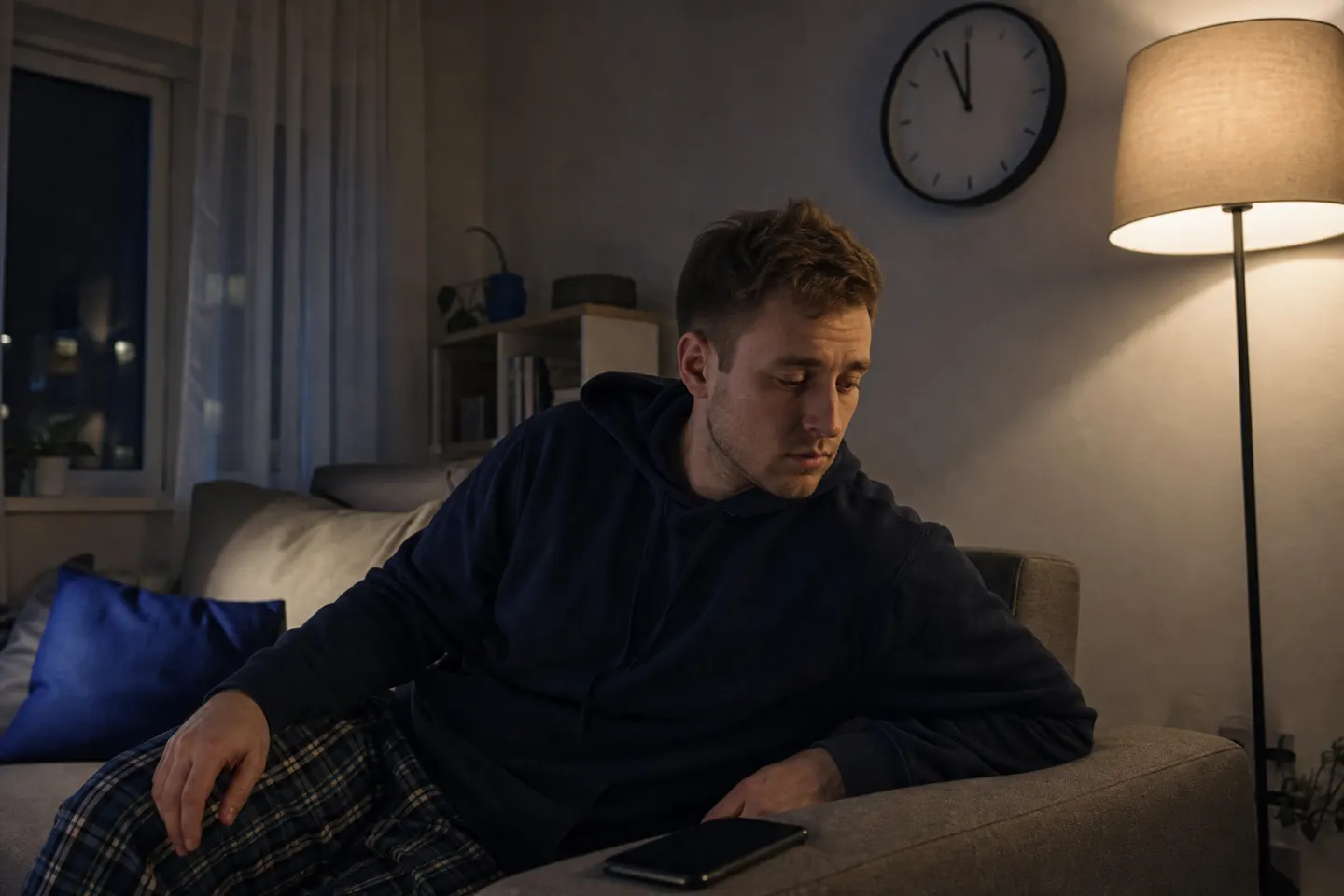
- Late at night, in bed. This is often less about desire than about not wanting the day to end. Charge your phone outside the bedroom, keep a paper book or a podcast by the bed, and set a time to stop screens. Why you stay up when you are tired looks at this pattern.
- The after-work slump. Change the transition: walk home part of the way, cook a proper meal, shower and change clothes before you sit down.
- Empty weekend afternoons. Plan them in advance, ideally with something that gets you out of the house: a class, a sport, a long walk with a destination, errands with a friend.
- After stress or a bad day. Something that actually releases tension: exercise, a hot shower, talking it through with someone, writing it down. Porn as a way to cope covers this in more depth.
- Alone and lonely. Distraction will not fix this one. A message, a call, a group activity, anything that involves another person.
- Bored with nothing urgent. Try something with a visible result: fixing, building, learning a skill, cooking something new. Something that feels worthwhile may help more than something that only passes time.
Better rewards: sleep, movement and people
You will read that certain activities “reset your dopamine.” That claim is not supported. What the evidence does support is less dramatic and more useful: some things make ordinary life better, which makes a quick escape less necessary.
- Sleep. The NHS says most healthy adults need around 7 to 9 hours a night, and suggests a regular routine, time to relax before bed and putting your phone away before bed. NHS on sleep. Tiredness makes every urge harder to manage.
- Movement. The WHO says physical activity in adults reduces symptoms of depression and anxiety and can improve overall wellbeing. WHO on physical activity. It is not a cure for a porn habit. In a survey of 600 Chinese adults who used porn, regular exercisers showed a weaker link between frustrated needs and using porn to cope, but a stronger link from coping motives to problematic use. Read the study. The study could not show cause, but the mixed result is a fair warning: the gym helps your mood and health, and it does not replace dealing with what you were coping with.
- People. A 2025 WHO report found that around 1 in 6 people worldwide are affected by loneliness, and that strong social connection is linked with better health and longer life. WHO on social connection. If loneliness and porn feed each other for you, time with people is the replacement that matters most, even when it is awkward at first.
A boredom plan for the first 30 days
This is a plan for your free time, not a promise about how quitting will feel. Adjust it to your week.
- Days 1 to 7: map and remove. Note when you would normally watch. Make porn harder to reach on your phone with a blocker or your phone’s built-in limits (step-by-step for iPhone and Android), and move the phone out of the bedroom at night.
- Days 8 to 14: fill the two riskiest slots. Pick the two times you marked most often and give each one a specific plan, written down: “Sunday 2 p.m.: football with the group from work,” not “be more active.”
- Days 15 to 21: add one person. Schedule at least two things this week that involve someone else. Reply to the friend you have been ignoring. Join something that meets weekly.
- Days 22 to 30: add one thing that matters. Start something you would be glad to have done in a year: a skill, a project, training for an event. If boredom is partly about meaning, purpose may help more than distraction.
- Throughout: expect empty moments. Some evenings will be boring, and that is allowed. Boredom you can sit through is different from boredom you must escape. If you slip, see what happened rather than starting over.
At the end of the month, look at which slots still feel risky and plan those next. How to change your porn use can help you build the wider plan.
What people describe
These are personal accounts, not evidence of what will work for others.
Felix, 21, lists his reasons for watching: “when I couldn’t sleep, when I was stressed, when someone had pissed me off, or out of boredom.” Read his story. Content warning: frank descriptions of masturbation and porn use.
Daan writes: “If I’d had someone to spend my free time with, maybe it would have been easier to quit.” He took up the gym: “Sometimes it helps.” Read his story. Content warning: it contains sexual descriptions.
Ethan, 25, describes responding to difficult emotions “by taking long, frequent walks outdoors—it helps, believe me—meeting friends and learning to dance.” Read his story.
When boredom is something else
If nothing feels interesting for weeks, even things you used to enjoy, it may not be boredom. Low motivation and depression can look similar from the inside, and both deserve a conversation with a GP. If restlessness and boredom have followed you all your life, ADHD and porn may be worth reading.

No published comments yet.